Thinking about a homesite, hobby farm, or weekend retreat near Lynchburg? Rural acres look simple at first glance, but the details behind access, utilities, soils, and local rules can make or break your plan. With a clear checklist and a few official tools, you can turn unknowns into confident decisions. This guide shows you the key checks for Moore County land, where to verify facts, and how to budget your due diligence. Let’s dive in.
Know the local landscape first
Moore County’s planning rules are active and evolving. Recent ordinance activity on lot sizes and multifamily uses has been reported in local media, including local reporting on April 23, 2025 that highlighted changes and a related dispute. Treat zoning as a moving target and confirm the current code before you assume what is allowed.
Public water and sewer coverage is limited outside the core service areas. The Metro Moore County Utility Department operates the systems that serve Lynchburg and nearby service zones. Whether a parcel can tap municipal water or must rely on a well and septic is a major driver of lot size, layout, and cost.
Verify access and roads
Confirm legal access
Start by confirming how you legally reach the land. Does it front a public, maintained road, or do you cross another property on a recorded easement? Lenders and title companies treat unrecorded or unclear access as higher risk, which can impact financing and closing timelines. Review the deed, recorded plat, and any easement documents with the title company or the Moore County Register of Deeds.
Driveway permits and entrances
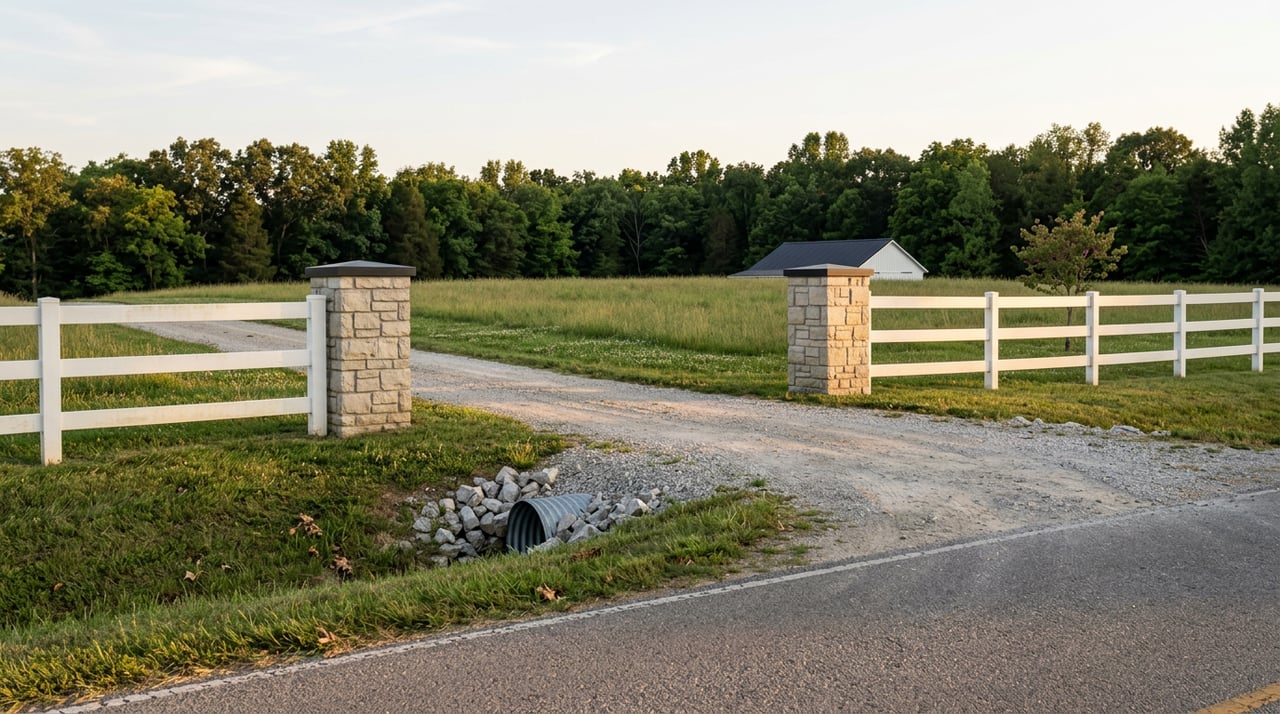
If your driveway connects to a state route, you will likely need a TDOT entrance or encroachment permit. Standards cover sight distance, culverts, and drainage. For county roads, the highway superintendent typically issues permits and may require specific construction methods. You can review the Tennessee driveway and entrance standards to understand common requirements before you design an entrance.
Map out utilities and waste systems
Water and sewer
Do not assume service is available. Ask the Metro Moore County Utility Department whether your parcel lies inside its service boundary and if there is capacity for your intended use. If service is not available, plan for a private well and onsite wastewater system. Get any utility commitments in writing if your purchase depends on them.
Electric power
Duck River Electric Membership Corporation (DREMC) serves the area around Lynchburg. Ask about service feasibility, transformer availability, and any line extension costs to reach your build site. A written feasibility response can help you budget and satisfy lender questions.
Septic feasibility
In rural Moore County, a septic system is the norm. Soil suitability, slopes, and rock determine what will be permitted. The Tennessee Department of Health septic guidance explains how systems are evaluated, permitted, and maintained. Plan a site evaluation or perc test early, and keep a septic contingency in your contract until the results are in.
Private wells
Wells are common on acreage. Yield and water quality vary by site, so bring in a licensed driller to assess feasibility and plan to test water for safety before closing. If you hope to irrigate or supply multiple structures, ask about expected yield and pressure at the start.
Broadband and cell service
Coverage is mixed in rural pockets. Check carrier maps for your exact address to see if fixed wireless or fiber is available. If remote work is important, have a realistic backup plan such as satellite and verify speeds during your inspection window.
Assess soils, flood risk, and geology
Soils and buildability
Run the parcel through the NRCS Web Soil Survey to screen for depth to bedrock, drainage, and soil types. This is an early look that can flag likely constraints for drain fields, building pads, driveways, and pasture. A formal local site evaluation is still required for a septic permit.
Floodplain and drainage
Check the FEMA Flood Map Service Center for the official flood designation. Parcels inside a Special Flood Hazard Area can face elevation requirements, insurance costs, and lender conditions. Walk the property after a rain if possible to observe natural drainage patterns.
Karst and sinkholes
Much of Middle Tennessee sits on carbonate bedrock that can create sinkholes and caves. These features affect foundations, drainage, and sometimes well performance. Review the USGS karst overview for Middle Tennessee and consider a geotechnical or karst assessment for larger projects or where sinkhole signs are visible.
Zoning, lot sizes, and permits in Moore County
Zoning categories, minimum lot sizes, and permitted uses are set by the Metro Council and Planning Commission, and they are updated by ordinance. Because rules have been changing in 2024 and 2025, including items covered in local reporting on April 23, 2025, verify the exact zoning and any pending amendments for your specific parcel before you plan homes, rentals, or subdividing. In practice, you should expect to submit a site plan to Metro Codes or Planning before a building permit is issued. Larger projects can involve additional reviews and road or utility agreements.
Title, surveys, and easements
Order a title commitment early and pair it with a professional survey. A boundary survey is common, while an ALTA/NSPS Land Title Survey is often required by lenders for commercial or complex tracts. The standard was updated, and the current ALTA/NSPS Land Title Survey standard (effective 2026) took effect on February 23, 2026. Make sure your surveyor and title company are aligned on the exact standard your lender requires.
Title review should also confirm recorded easements for ingress, utilities, rights of way, covenants, mineral or timber reservations, and any prior leases. The Moore County Register of Deeds is the official source for recorded documents tied to the parcel.
Financing, timelines, and cost ranges
Vacant land is financed differently than a home. Agricultural and rural buyers often use USDA or Farm Credit style programs that have different eligibility and terms than conventional mortgages. The USDA’s economic resources outline how farm and land balance sheets differ, which helps explain why underwriting looks different for raw acreage. For background, see USDA’s documentation on farm sector finance through the Economic Research Service, which summarizes program structures and common requirements for rural assets like land and equipment (USDA and Farm Credit style programs).
Plan for more time and a larger down payment on raw land, plus extra steps like surveys and soil tests. Appraisers rely on comparable land sales, which can be scarce, so appraisal timelines may stretch. Many lenders will want proof of legal access, septic feasibility, and utility potential before closing.
Here are order-of-magnitude cost ranges to help you budget due diligence on a small rural parcel. Always get local quotes for your specific site:
- Boundary survey: about $1,000 to $3,500 depending on acreage and complexity.
- Perc or site evaluation: roughly $300 to $1,200.
- Septic design: around $1,500 to $5,000 if an engineered system is needed.
- Well drilling: highly variable, often $5,000 to $20,000 or more based on depth and rock.
- Wetlands delineation: about $1,500 to $5,000 if indicated by maps or site conditions.
Your step-by-step due diligence checklist
Use this as a simple path from offer to closing. Keep contingencies in place until each item checks out.
- Parcel basics
- Confirm the legal description, parcel ID, and owner. Pull the recorded deed and any plats or easements from the Register of Deeds.
- Zoning and use
- Verify current zoning, overlays, and minimum lot sizes with Metro Planning or Codes. Ask about any pending ordinances and whether the parcel is inside a utility service boundary.
- Access
- Confirm legal, recorded access. If the driveway connects to a state route, plan for a TDOT entrance permit and culvert standards. Ask the county highway office about county-road entrances and inspections.
- Utilities
- Confirm water and sewer availability and capacity with the Metro utility. Ask DREMC about service feasibility and any line extension costs. Get key utility statements in writing.
- Septic and well
- Order a site evaluation or perc test. Have a licensed driller assess well yield prospects. Keep a septic and well contingency in your contract until tests are complete.
- Soils and topography
- Run the parcel through the NRCS Web Soil Survey. For small-farm goals, consider a soils and productivity summary.
- Floodplain and wetlands
- Check FEMA flood maps. If mapping or site conditions suggest wetlands or streams, budget for a delineation and permitting check.
- Title and survey
- Order a title commitment and a boundary or ALTA/NSPS survey that will satisfy your lender and title requirements. Review all exceptions and easements.
- Geologic and environmental
- Screen for karst or sinkhole risk. If heavy earthwork or commercial use is planned, consider a Phase I environmental review.
- Financing and taxes
- Speak with lenders early about raw land loans and farm programs. Review current county tax details and any ag or homestead classifications with the county office.
- Permits and approvals
- For any planned structures or divisions, confirm the site plan and building permit steps and expected timelines with Metro Codes or Planning.
- Closing items
- Require a clean title commitment, acceptable survey, proof of legal access, and written utility and septic feasibility before removing contingencies.
Ready to move from interest to offer?
Buying land near Lynchburg rewards careful preparation. Focus first on the four big drivers of feasibility: legal access, water and sewer or well and septic path, soils, and current zoning. Use the official tools above to get parcel-level answers, and put clear contingencies in your contract so your money and timeline are protected.
If you want a local guide who specializes in land, farms, and acreage across Southern Middle Tennessee, reach out to Ben Craig. You will get straightforward advice, a practical due diligence plan, and a closing path that fits your goals.
FAQs
What should I check first when buying rural land near Lynchburg?
- Start with legal access, water and sewer availability, septic feasibility through a site evaluation, and the parcel’s current zoning and minimum lot size.
How do I confirm water and sewer service for a Moore County parcel?
- Contact the Metro utility to see if the parcel is in the service boundary and whether capacity is available for your intended use, and request any commitments in writing.
What is a perc test and why does it matter in Tennessee?
- A perc or site evaluation measures soil absorption and suitability for a septic system, which is essential for most rural homes not served by municipal sewer.
Do I need an ALTA/NSPS survey for acreage in Moore County?
- Many buyers close with a boundary survey, but lenders on complex or commercial tracts often require an ALTA/NSPS survey that maps easements and improvements to a national standard.
Are zoning rules changing in Metro Moore County?
- Yes, local rules have been updated in recent years, and additional changes are possible, so verify the parcel’s current zoning and any pending ordinances before you plan a project.
How is buying raw land financed compared to a home?
- Expect higher down payments and different terms, with many rural buyers using specialized farm or USDA-style programs and allowing more time for appraisals and underwriting.